Saga

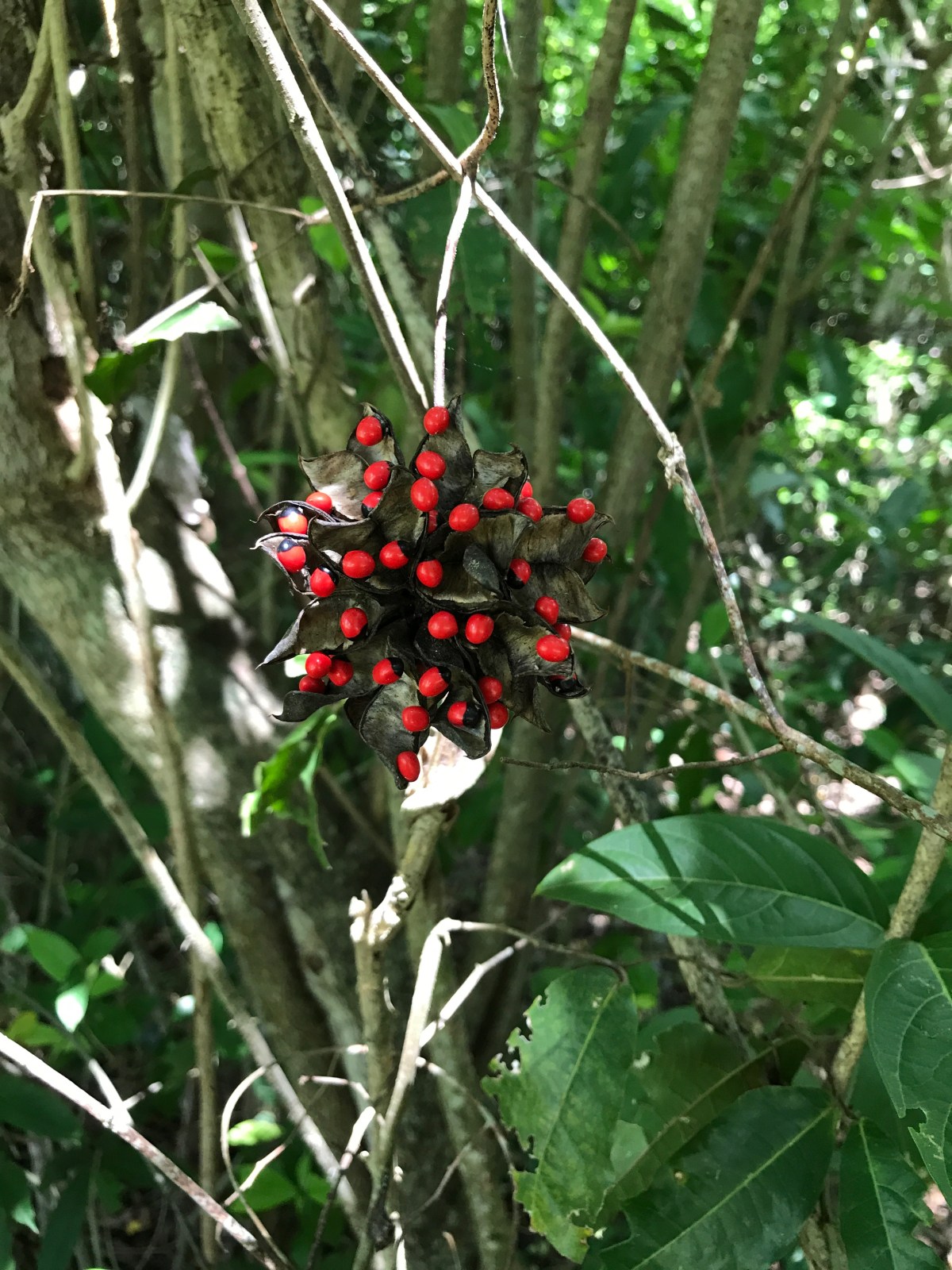
Abrus precatorius

Family: Fabaceae

Common Name: Saga, (Tagalog), Rosary Pea, Matang Pusa, Berdegonis (Ilocano), Oyang-ya (Visayas), Mata-Mata, Mata ni Kenkoy, Jaquerity Pea, Wild Liquorice

Reference: Co’s Digital Flora of the Philippines Facebook Group

Origin: probably a native of tropical Asia, found in South Africa, China, West Indies, Brazil and India (Stuartxchange)

The seeds are very attractive and are made into bracelets or chokers as protection from bad spirits. The seeds are also toxic! Strange to think that bracelets made of toxic seeds are put on infants. The seeds contain the toxin abrin, a ribosome inhibitor. According to Trinket C, no need to remove the plant because “the toxin is only very potent when purified”.

It is a vine. I found it growing at the compost area. I couldn’t see the leaves or flowers of the plant.

saga

update: I know what the leaves look like. It looks like an Ipil-Ipil seedling that’s growing like a vine. I see it in shady areas.
 

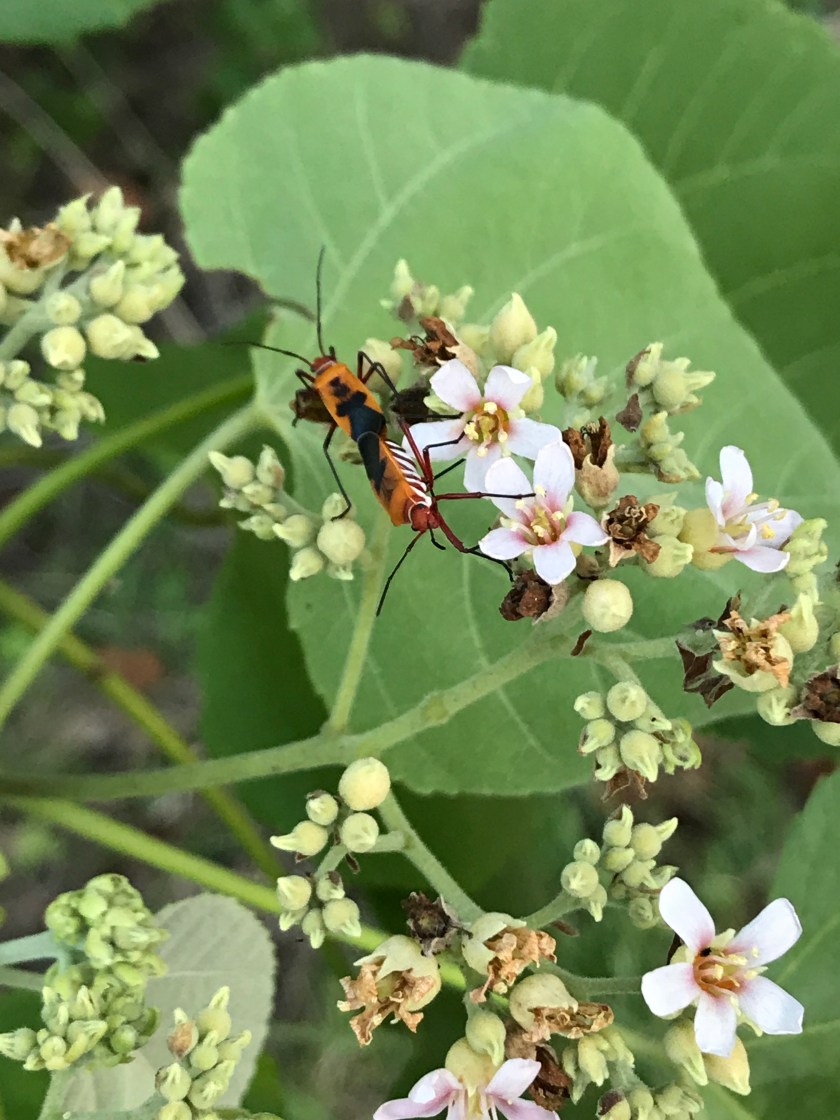
Melochia umbellata

Melochia umbellata

Family: Byttneriaceae

Origin: native from India to New Guinea and Philippines. Introduced beyond in southern Asia and Pacific Island

Common name: Banitlog, Hierba de Soldado

Reference: Phytoimages

Here is a description from Common Trees of Hawaii:

This is a small tree that reaches 50ft (15m) tall. Leaves alternate, with long slender stalk 2 3/4 – 4 inches (7-10cm) long. Blades broadly ovate, large … abruptly long-pointed, heart-shaped at base, finely sawtoothed, thin, soft hairy, dull green above and gray green beneath.

It was introduced in Hawaii in 1925 because it is quick growing and as shade for young forest trees and coffee. It is now considered an invasive weed there.

According to Pacific Island Ecosystems at Risk (PIER) the calyx (sepals) ranges from yellowish green to pinkish brown and the petals from pale pink to red, rarely yellow or orange-tinged, pale blue, purple, or violet.

IMG_1354

IMG_1333


Alien Frog

Have you seen this frog? He’s wanted! If you see a small frog with a stumpy body and stripes down its side, it could be an Asiatic Painted Frog Kaloula pulchra. The Philippine Center for Terrestrial and Aquatic Research is documenting and mapping the spread of this alien and invasive species.  You can help them by sending a photo with the location (Barangay, Municipality/City, province, island), date, and your name to: pinoynaturalist@gmail.com .

Scientists believe that the frog was accidentally introduced through agricultural and horticultural products. Unbeknownst to gardeners and plant collectors, deep within the soil of their potted plants are hibernating frogs that will wake up and start mooing like a cow once the rainy season starts!

IMG_1256

Non-natives like the Kaloula pulchra compete with the native wildlife for food and habitat. They can also spread diseases to the native wildlife.

The native Kaloula species are: Smooth-Fingered Narrow-Mouthed Frog Kaloula baleata, Trncate-Toed Chorus Frog Kaloula conjuncta, Catanduanes Narrow-Mouthed Frog Kaloula kokacii, Slender-Digit Choruos Frog Kaloula picta, and Luzon Narrow-Mouthed Frog Kaloula rigida.