June 2023

This month we had two exciting developments at the refuge! Here’s the first one:

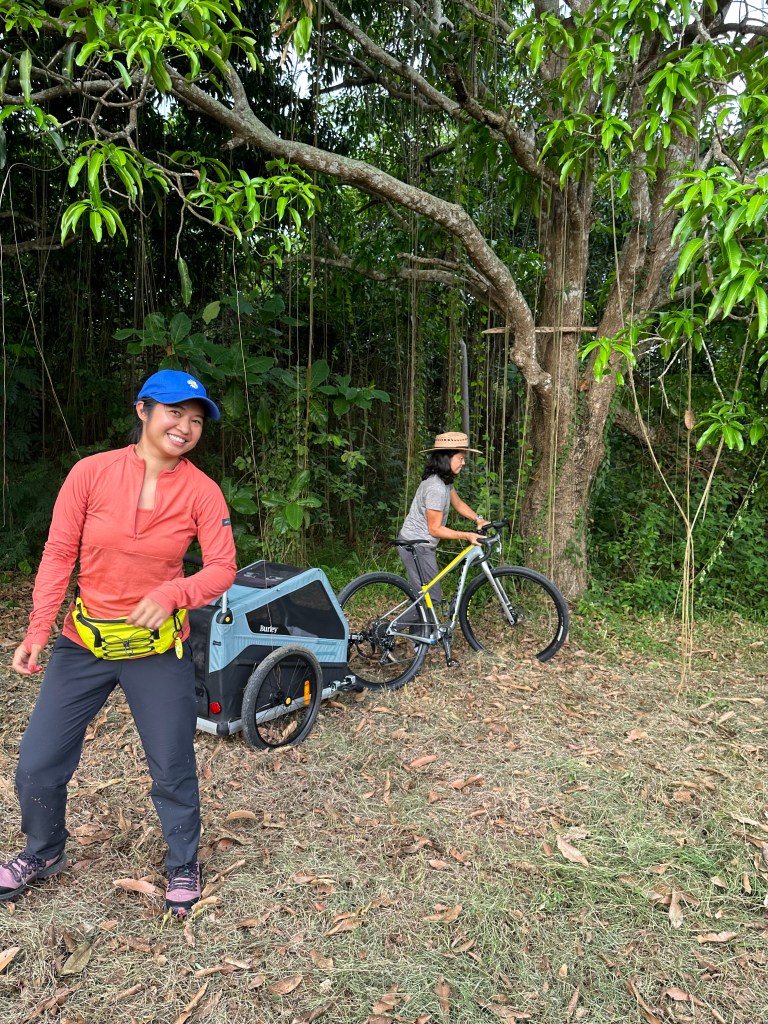
Woo hoo, the Burley is attached to my bike!

We went biking with the Burley Bark Ranger! It rolls very well and is surprisingly easy to pull! It is faster and takes less effort to bike with the trailer than to walk and push the trailer. Having a bike to get around the refuge saves so much energy!

First Tonji attached the Burley to his bike to see if it works well. Success, Momo likes it!

We are so fast now!!

Our second exciting development is a new, very big pond! I like to call it a lake because it is going to be much bigger than our previous ponds. It is still in the planning stages. We watched a lot of videos showing how man-made ponds and small water impounding areas attract a lot of wildlife. Capturing rain water and preventing it from running off is one of the basic concepts of permaculture. It is a way to restore the underground water table and allow more life to thrive in an area.

We were very encouraged by our experience with the water lily ponds. With our other ponds, we didn’t add plants or fish and just observed how the pond would develop. With the water lily ponds, we built the ponds so they were more accessible and easier to view. Adding water plants and guppies made the ponds come alive! It was enjoyable to hang out at the pond and observe all the activity goint on there.

Our goal for the new big pond is to build a pond that is beautiful, deep enough to hold rain water all year round, big enough to paddle around in a small boat, and attractive to all sorts of wildlife, especially birds! We hope it will be a beautiful spot where we can hang out and do relaxed birdwatching.

First we had to find a location for this new pond. With Tonji’s experience building the other ponds, he knew that the ideal site should be as flat as possible. If the site is sloped, then you will need to build up the lower end to make it as tall as the higher end. That makes the pond more difficult to build. We also wanted a site that was shrubby and weedy and not have too many trees to uproot. Another consideration was accessibility since building this very big pond would require big bulldozers, backhoes, and trucks.

Once we selected the site for the new pond. The next step is to bring in the people and machinery to build it. At some point, we will also design a simple structure where we can sit in the shade while watching birds. Something that will function like a bird hide but hopefully look prettier!
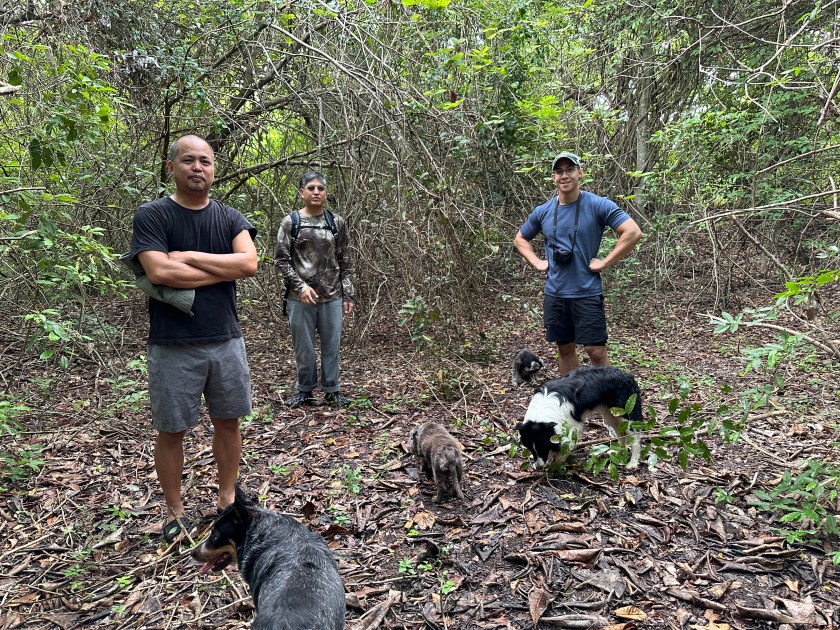
Checking to see if the new pond fit in the mango area
the dogs are in the Gator

This is close to the site we chose!
A beautiful day for wandering around!
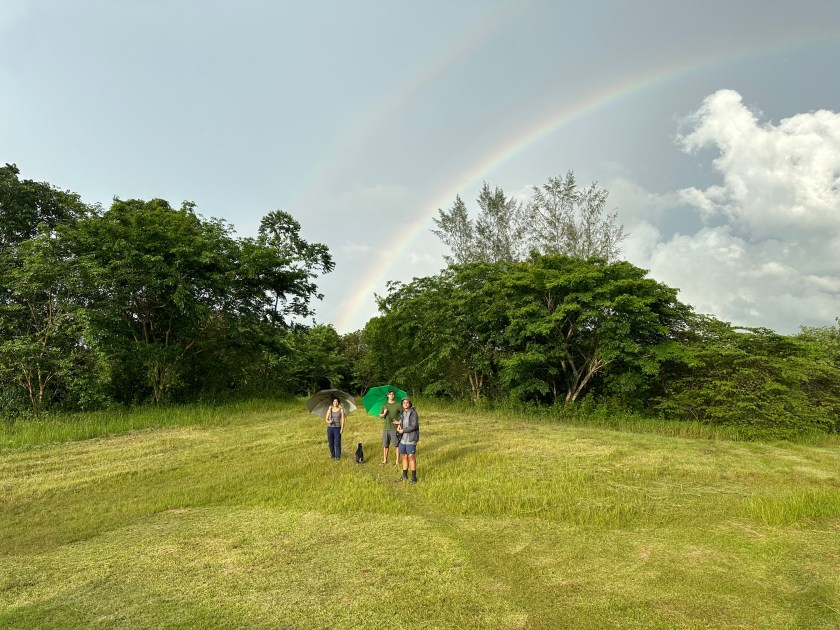
Look for the double rainbow!

I think this is the start of a new phase of how we enjoy the refuge. It’s the biking and the hanging out at the “lake house/bird hide” stage!

May Flowers: Philippine Teak and Narra

After a very hot and dry April, we had May showers and flowers!

Philippine Teak flowers
Philippine Teak flowers in May 2019

This is the first year our Philippine Teak produced flowers. We received 3 wildings from Dr. Ed Gomez in August 2016. They came from the Philippine Teak tree that he planted in the back of the Marine Science Institute in UP Diliman. We kept them in the nursery for 1 year before planting them near the cottage. Two survived, one died unexpectedly. This year, one of the two surviving trees flowered for the first time!

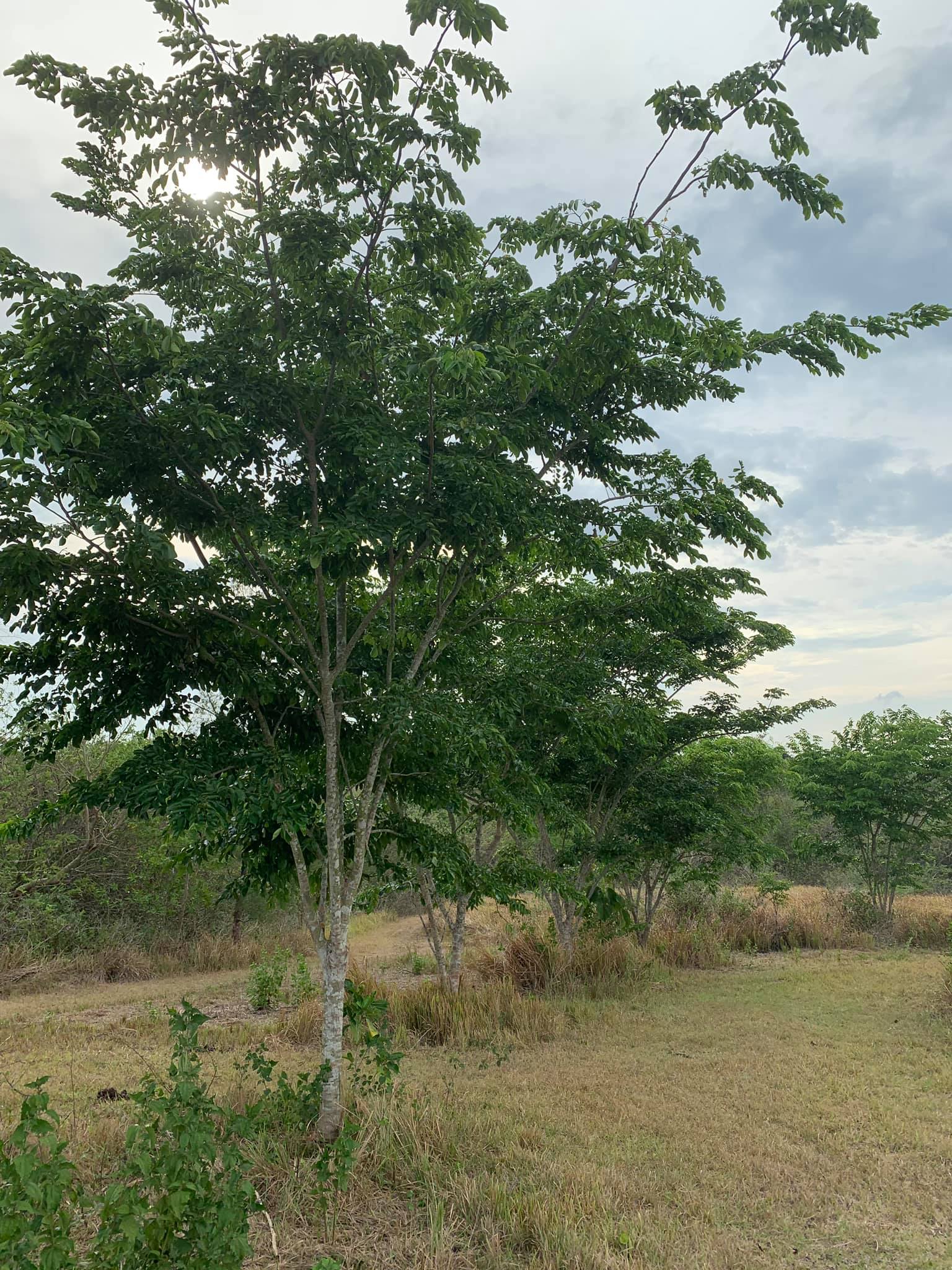
Philippine Teak growing near our cottage, May 2019

Our Narra trees also flowered for the first time this year! Tonji is very excited about the Narra flowers. He is already imagining a corridor of yellow blooms and the grass carpeted in fallen yellow flowers.

Narra flowers, May 2019
A corridor of Narra trees

It was such a treat to see the Philippine Teak and Narra flowers after a hot and difficult summer. In March, Barkley’s eye got injured while we were at the refuge. Something small, like a seed got embedded in his right eye. He had surgery on his eye.

Barkley’s eye was already injured here. It got worse!

In April our outdoor activities ground to a halt while we tended to Barkley’s eye. It was very hot and dry at the refuge. We just did day trips without the dogs to check up on the plants, trees, and construction projects.

It’s so dry! This is what it looked like in April.

Everything dries up in April. The ponds have no water, the grass is brown, even the big clump of bamboo in the distance turns yellow. It’s such a relief when it starts to rain again in May and everything turns green again!

Green again!

Alien Frog

Have you seen this frog? He’s wanted! If you see a small frog with a stumpy body and stripes down its side, it could be an Asiatic Painted Frog Kaloula pulchra. The Philippine Center for Terrestrial and Aquatic Research is documenting and mapping the spread of this alien and invasive species.  You can help them by sending a photo with the location (Barangay, Municipality/City, province, island), date, and your name to: pinoynaturalist@gmail.com .

Scientists believe that the frog was accidentally introduced through agricultural and horticultural products. Unbeknownst to gardeners and plant collectors, deep within the soil of their potted plants are hibernating frogs that will wake up and start mooing like a cow once the rainy season starts!

IMG_1256

Non-natives like the Kaloula pulchra compete with the native wildlife for food and habitat. They can also spread diseases to the native wildlife.

The native Kaloula species are: Smooth-Fingered Narrow-Mouthed Frog Kaloula baleata, Trncate-Toed Chorus Frog Kaloula conjuncta, Catanduanes Narrow-Mouthed Frog Kaloula kokacii, Slender-Digit Choruos Frog Kaloula picta, and Luzon Narrow-Mouthed Frog Kaloula rigida.