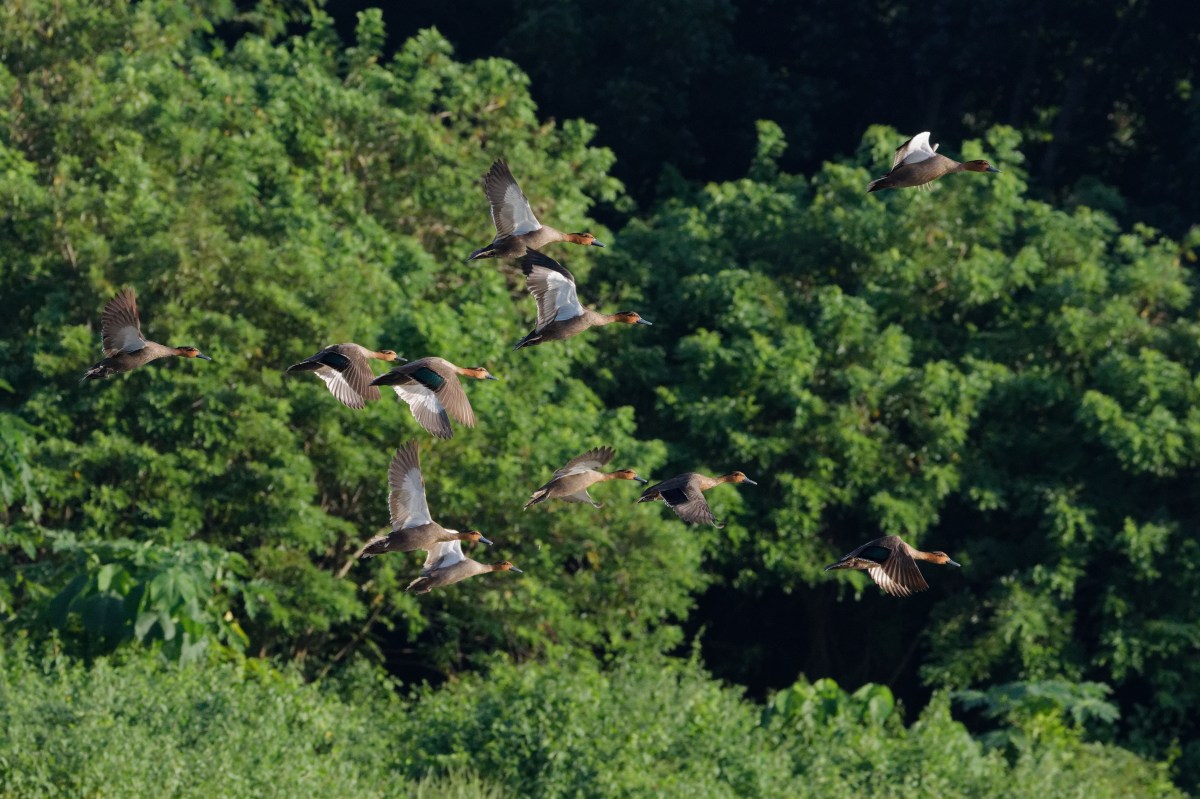
Every visit to the refuge, no matter how brief, is food for the soul. The things we get to see and experience bring us so much satisfaction and make us want to return again and again. It fuels our dreams of even more projects and experiments to do at the refuge.
It is at the refuge where we can go swimming at night under a sky full of stars and the Milky Way! It is magical!

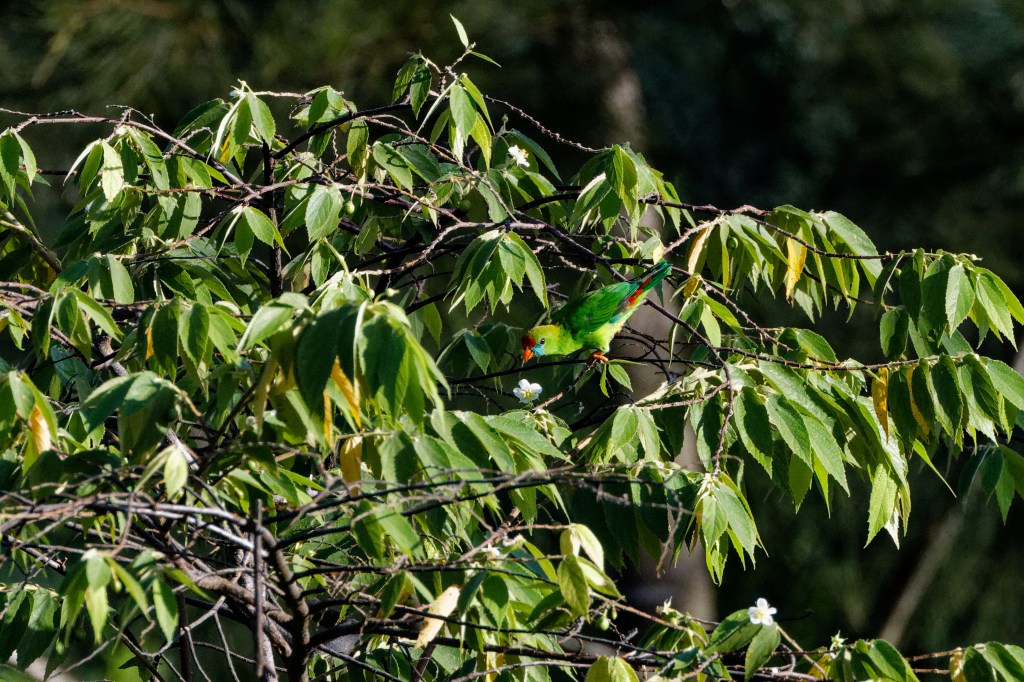
We celebrated Tonji’s birthday at the refuge. As a special birthday treat, a Colasisi posed nicely for him in an Aratiles tree. We have been seeing the Colasisi regularly, but this is a particularly good view with all of its bright colors clearly visible.

The Bangkal trees have fruits! Seeing these fruits brought back memories of one of our birding trips to Sablayan Penal Colony in Mindoro. There were many Bangkal trees and the fruits were scattered on the ground. That trip to Mindoro gave us the idea of planting Bangkal trees. Now we have our own row of Bangkal trees with fruits!


The Bagras or Rainbow Eucalyptus tree near the cottage is getting taller and taller. It’s a good thing it has a few flowering branches near the ground. The trunk is becoming more colorful. Not quite rainbow-like yet though!


Every time we visit the refuge we always wonder — what are the ducks up to now? We think about them even when we’re not at the refuge. It is a short walk from the cottage to the Big Pond. There’s a path through the trees, then a dirt road that goes over some water, then you need to scramble up to top of the pond wall before you can see the pond. There is a lot of anticipation during that short walk. What will we see?
The Big Pond has leveled up! We are seeing a whole new level of wildlife activity at the pond. We are now at Level 4 wildlife activity!
Note: These are not actual scientific levels! This is purely based what we’ve experienced as birdwatchers!
TONJI AND SYLVIA’S POND WILDLIFE ACTIVITY LEVELS
LEVEL 1 – See ducks in the farm/refuge
At this level, you are happy that you saw an actual wild duck in your airspace because this means that there is a good chance that the pond you built attracted ducks to your place.
LEVEL 2 -See ducks swimming
You were able to confirm that the ducks are using your pond. You saw them swimming!
LEVEL 3 – See ducks swimming and not flying away when you approach
This level can be hard to achieve if your pond is small or difficult to access. It will be easier to achieve this level by designing your pond so that the ducks feel safe enough to stay in the pond even in disturbed.
LEVEL 4 – See multiple groups of ducks flying overhead, criss-crossing in the air, landing, swimming, and taking off all at the same time!
We are at this level now! This is what we used to experience in a very large scale, back in the day when we used to go to Candaba Wetlands. Sadly, those wetlands are now farmlands. This is a much, much smaller scale than Candaba was, but it is still quite satisfying and has a lot of potential!
LEVEL 5 – THIS LEVEL IS STILL LOCKED! Baby ducks
This level will be unlocked when you see baby ducks swimming in the pond. I have never seen baby Philippine Ducks swimming. I believe I’ve only seen them one time, and they were walking.
LEVEL 6 – THIS LEVEL IS STILL LOCKED! Attracting rare migrants
This is the dream level. This level will be unlocked when all the bird activity and plants have made the pond look so inviting that migrating ducks use the pond as a stopover and refueling station!

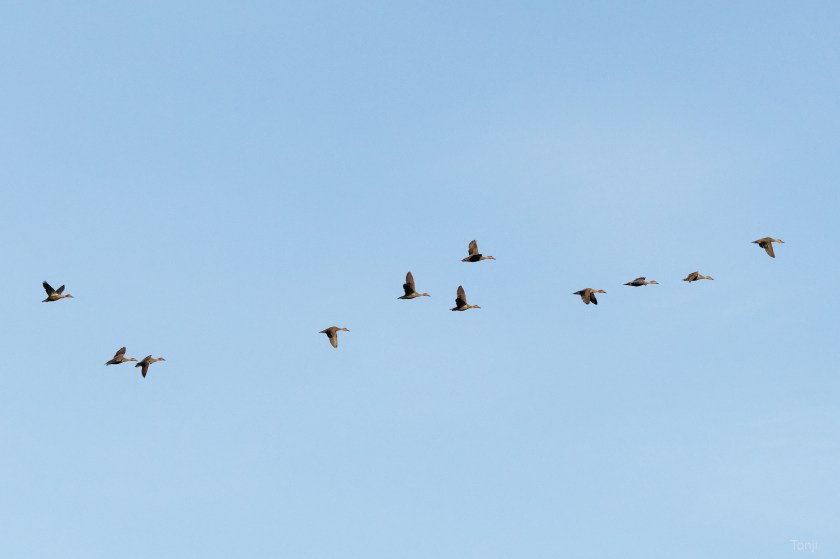
Philippine Ducks photo by Tonji Ramos

Here’s to unlocking more levels!
 Tonji and Sylvia's Wildlife Refuge
Hi Sylvia and Tonji,
I stumbled across your blog while researching flowering trees native or endemic to the Philippines. Has been reading your postings these last few days and I must say this: You inspire my wife and me. Your mission statement for the use of your farm resonates deeply with us, who are committed to environmental preservation.
My wife and I, now part of that subspecies called seniors. are looking forward to building a retirement hut up in the eastern foothills of Mount Malindang in northern Mindanao. The land is zoned as agricultural but is still 75 percent treed — a combination of old growth forest and those more recently introduced trees, including some coconuts. The cleared area lies idle. Your blogs are a treasure trove of info on how to best implement our vision to turn the place into a wildlife refuge with flowering trees.
I got a question for you. How often have you encountered dangerous snakes, especially cobras and pythons, in your farm? Were the encounters mostly terrestrial? Or did you see them up in the trees lazily sunbathing? Which species have you seen? Aren’t you worried about your dogs running into them?
Thanks in advance.
Ciao!
Charlie
Hi Charlie! Thank you so much for reading the blog and leaving such a lovely comment!
Good question about snakes. Yes, we are worried about snakes. One of the first things we did after purchasing the property was to buy a tractor and a grass cutter attachment so that Tonji could cut out wide paths in the grass. When we move around the farm we stay on the paths. Our logic is that if we come across a snake, it can easily avoid us by moving out of the path and back into the tall grass at the sides of the path. The paths are our main anti-snake measure.
The snakes we usually see are small Wolf snakes. They are only mildly venomous. We usually see them by the house because they seem to like shedding their skin near our house. I think they like the round river stones on the walls. Tonji sees more snakes than I do, usually while he’s on the tractor cutting the grass. He’s only seen a snake on a tree once. It climbed up a tree to avoid him. Based on his description, I would guess it was a Reticulated Python. The snakes are usually on the ground. I think we would have more snake encounters if we had chickens or other small caged animals that snakes would want to eat.
So far, my dogs have not seen any snakes. The only time they go into the long grass is when they see a bird and try to go after it. I discourage them from going after birds though, so it’s only happened a couple of times.
The paths that Tonji makes are the width of two grass cutters. In the parts where we drive through, the paths are the width of 3 grass cutters. Tonji takes pride in his path making. He tries to make them scenic and interesting!
Merry Christmas and a Happy New Year to you Sylvia and Tonji!
Thanks so much for the tips. Making a pathway cleared of shrubs and grass makes a lot of sense as it’ll be easier to spot snakes. I also thought of not going out at night when they are generally on the hunt for their meals plus other precautions like wearing long denims and wellies.
We’re giving ourselves a year and half before starting any work on the land. We appreciate the practical tips from you, who are much further down the road than us. Been voraciously scouring your blogs for other tips on land use and precautions, especially with keeping little pets in the property where we might reside full time eventually. By the way, we love the river stone finish to your external walls.
Enjoy the holiday season out there.
Ciao!
Charlie
What a wonderful journey you are on with the pond. Would you mind if I followed it? My husband and I travel quite a lot but do have a small pond, I particularly love.
Thank you! I would love to have you follow the blog. So nice to hear that you also have a pond!