Alien Frog

Have you seen this frog? He’s wanted! If you see a small frog with a stumpy body and stripes down its side, it could be an Asiatic Painted Frog Kaloula pulchra. The Philippine Center for Terrestrial and Aquatic Research is documenting and mapping the spread of this alien and invasive species.  You can help them by sending a photo with the location (Barangay, Municipality/City, province, island), date, and your name to: pinoynaturalist@gmail.com .

Scientists believe that the frog was accidentally introduced through agricultural and horticultural products. Unbeknownst to gardeners and plant collectors, deep within the soil of their potted plants are hibernating frogs that will wake up and start mooing like a cow once the rainy season starts!

IMG_1256

Non-natives like the Kaloula pulchra compete with the native wildlife for food and habitat. They can also spread diseases to the native wildlife.

The native Kaloula species are: Smooth-Fingered Narrow-Mouthed Frog Kaloula baleata, Trncate-Toed Chorus Frog Kaloula conjuncta, Catanduanes Narrow-Mouthed Frog Kaloula kokacii, Slender-Digit Choruos Frog Kaloula picta, and Luzon Narrow-Mouthed Frog Kaloula rigida.


Ipil-Ipil

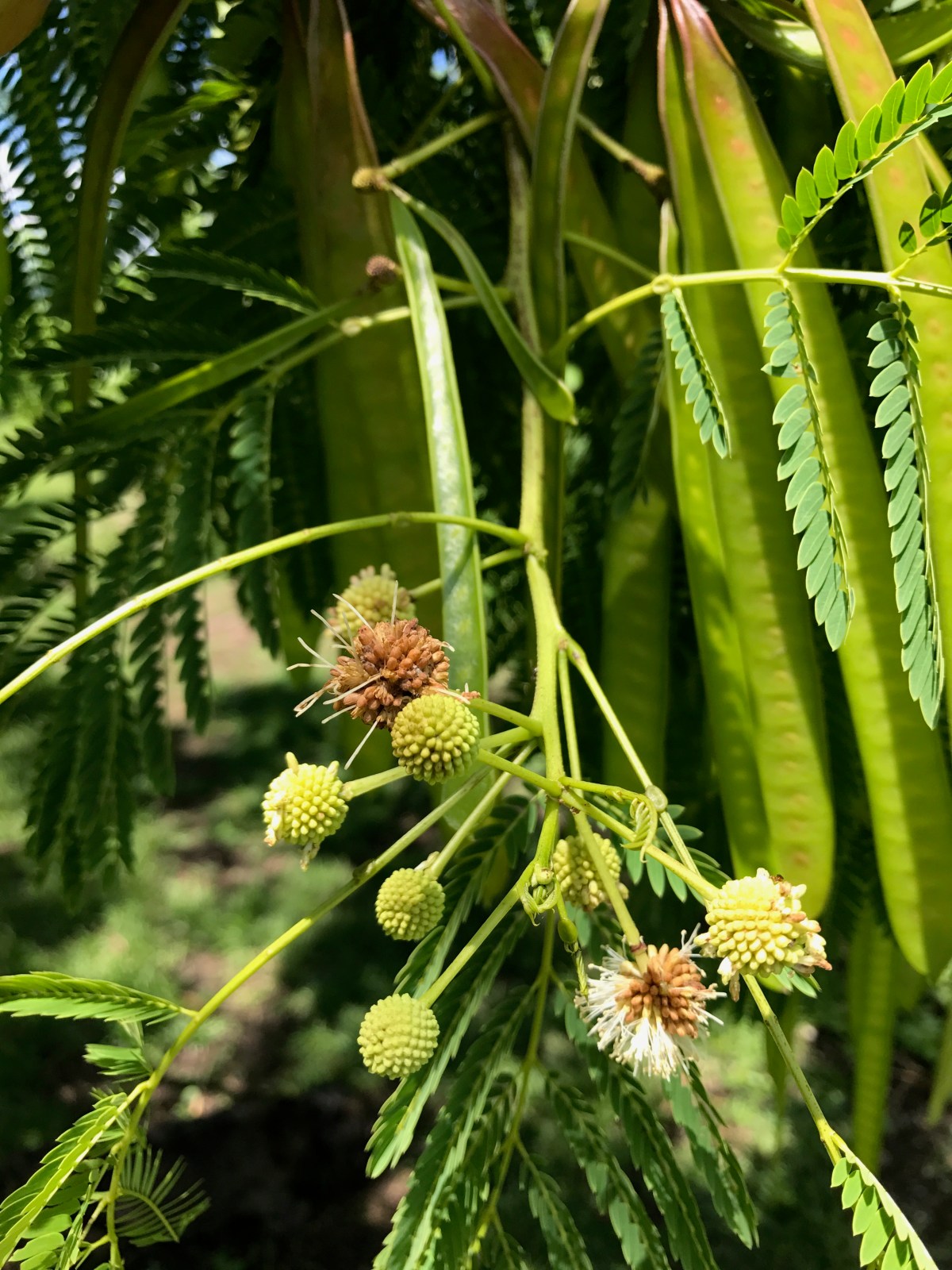
Leucaena leucocephala

Family: Fabaceae

Common Name: Ipil-Ipil

Origin: introduced during the Spanish times as feed for livestock

Reference: Stuartxchange

According to the Stuartxchange website, in the early 1970’s and early 80s this tree was known as the “miracle tree” because it is long-lived and highly nutritious as forage for animals. It is also one of the fastest growing leguminous trees. It also says that it was used in reforestation.

It is now considered an invasive weed.

From Global Invasive Species Database:

The fast-growing, nitrogen-fixing tree/shrub Leucaena leucocephala, is cultivated as a fodder plant, for green manure, as a windbreak, for reforestation, as a biofuel crop etc. Leucaena has been widely introduced due to its beneficial qualities; it has become an aggressive invader in disturbed areas in many tropical and sub-tropical locations and is listed as one of the ‘100 of the World’s Worst Invasive Alien Species’. This thornless tree can form dense monospecific thickets and is difficult to eradicate once established. It renders extensive areas unusable and inaccessible and threatens native plants.

I only noticed the presence of Ipil-Ipil in our place this year when I saw many seedlings coming up at the site where I’ve been clearing hagonoy weeds.  Then I started noticing seedlings coming up in other areas, as well as several trees in flower. We will be removing as many of the trees and seedlings as possible.

The Cutest Weed

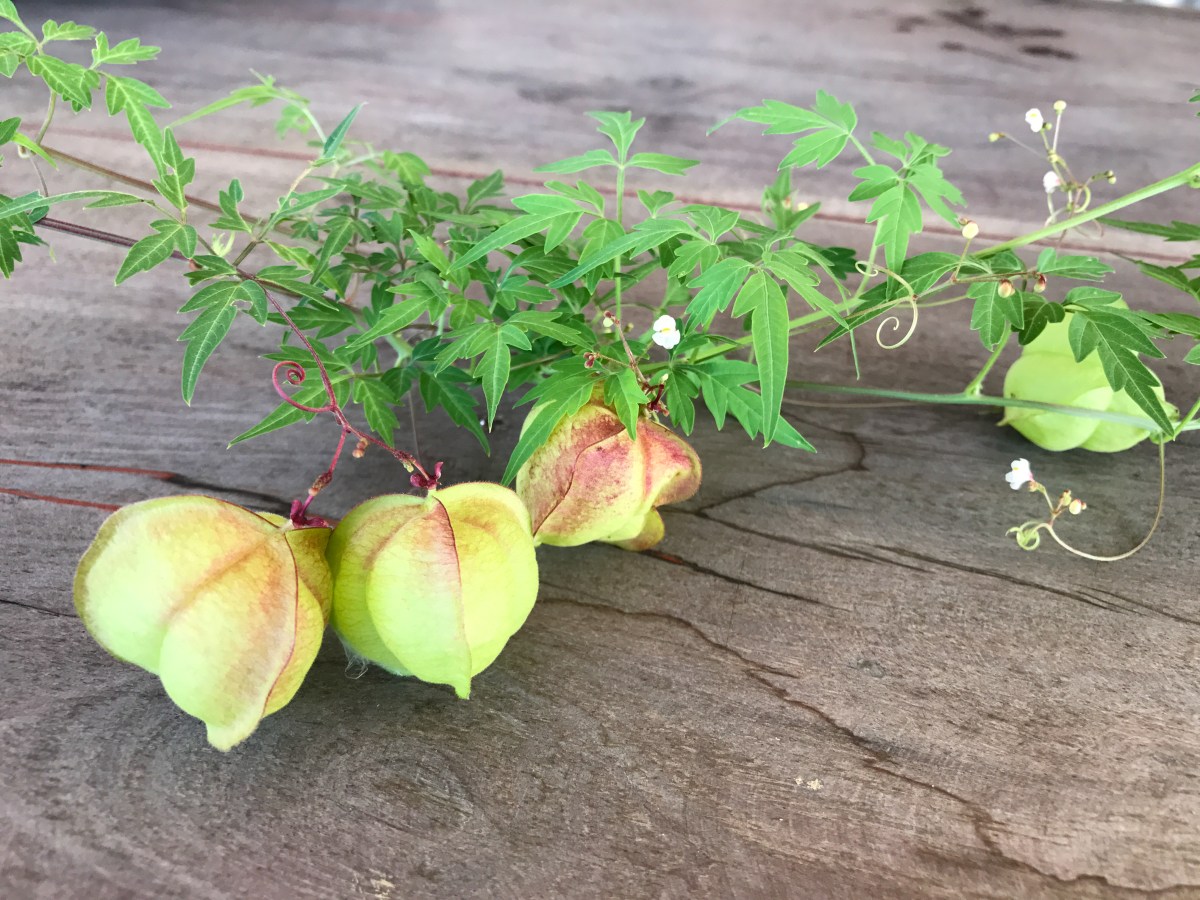
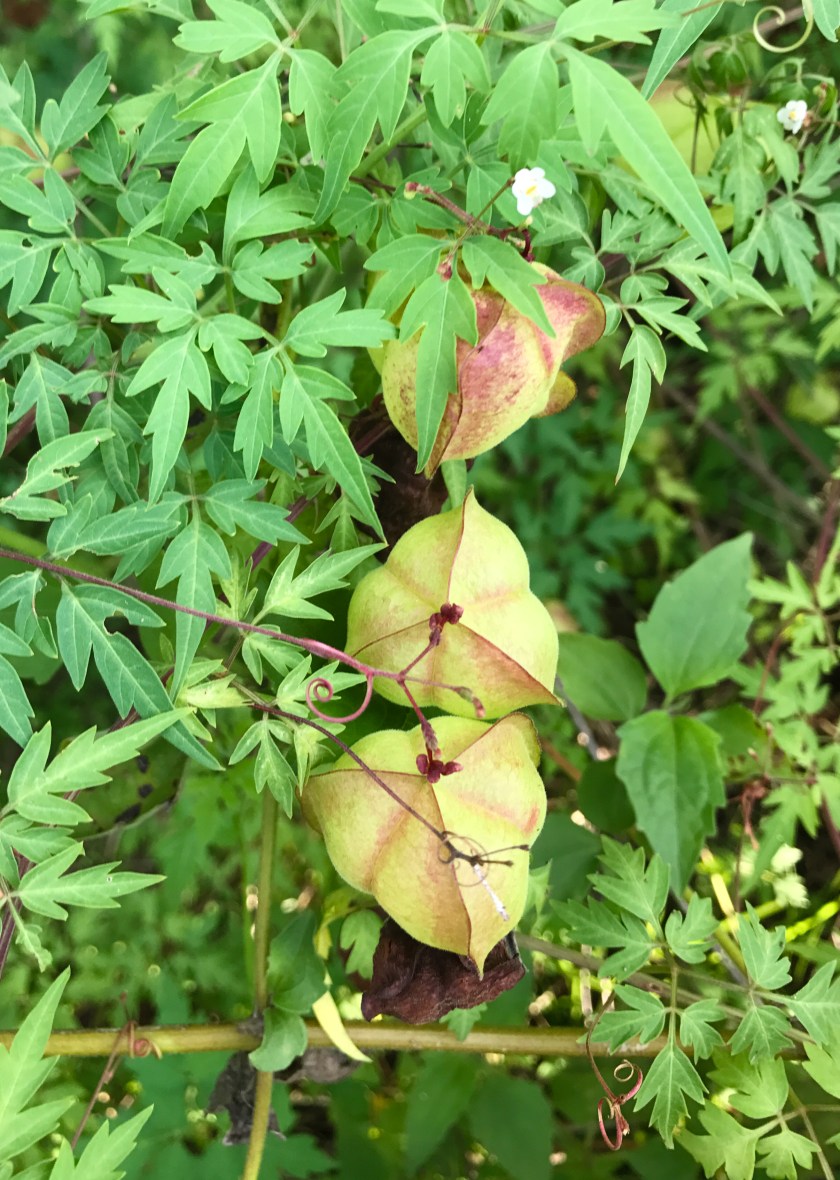
This is the cutest weed I’ve ever seen! It is a vine with dark pink tendrils. Inside each puffy ball are two seeds. The ripe seeds are black with white hearts! I didn’t get to inspect the dried up balls with the ripe seeds. Something to look at next time I’m at the farm!

Cardiospermum halicacabum
aka Heart Pea, Balloon Vine, Parol-parolan, Matang Kengkoy
It is an introduced plant and is found throughout the Philippines.

IMG_0988

It has small white flowers.

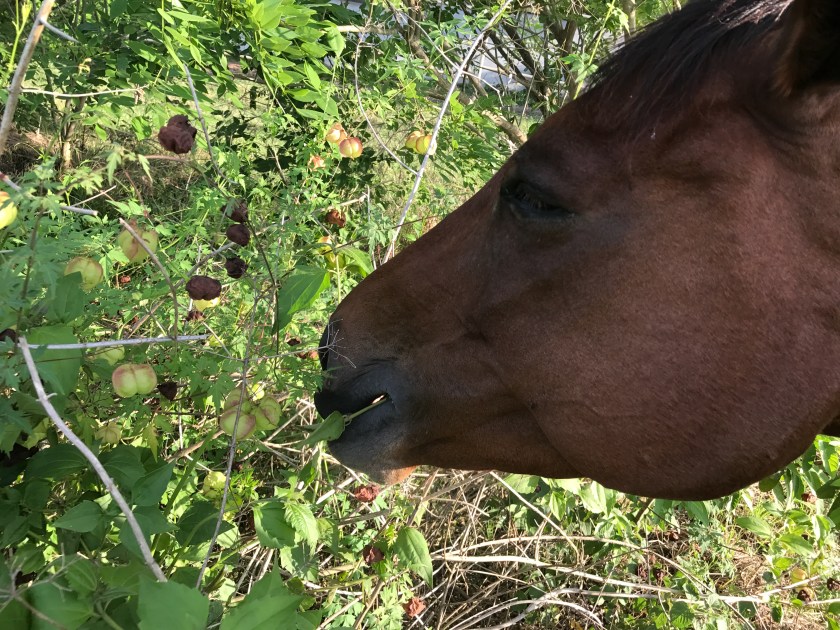
When I was taking pictures of the plant, Tara walked up to me and ate the hagonoy that was holding the weed up. No, Tara! It’s the cutest weed ever.

IMG_0986

And, you probably shouldn’t be the hagonoy either. It’s toxic!

Update:  Some friends have fond recollections of playing with this weed when they were kids! The puffs make a sound when popped. The black seeds were used for “sumpit” , a type of mouth blow gun.

2nd Update: Photos of the seeds.